 Check
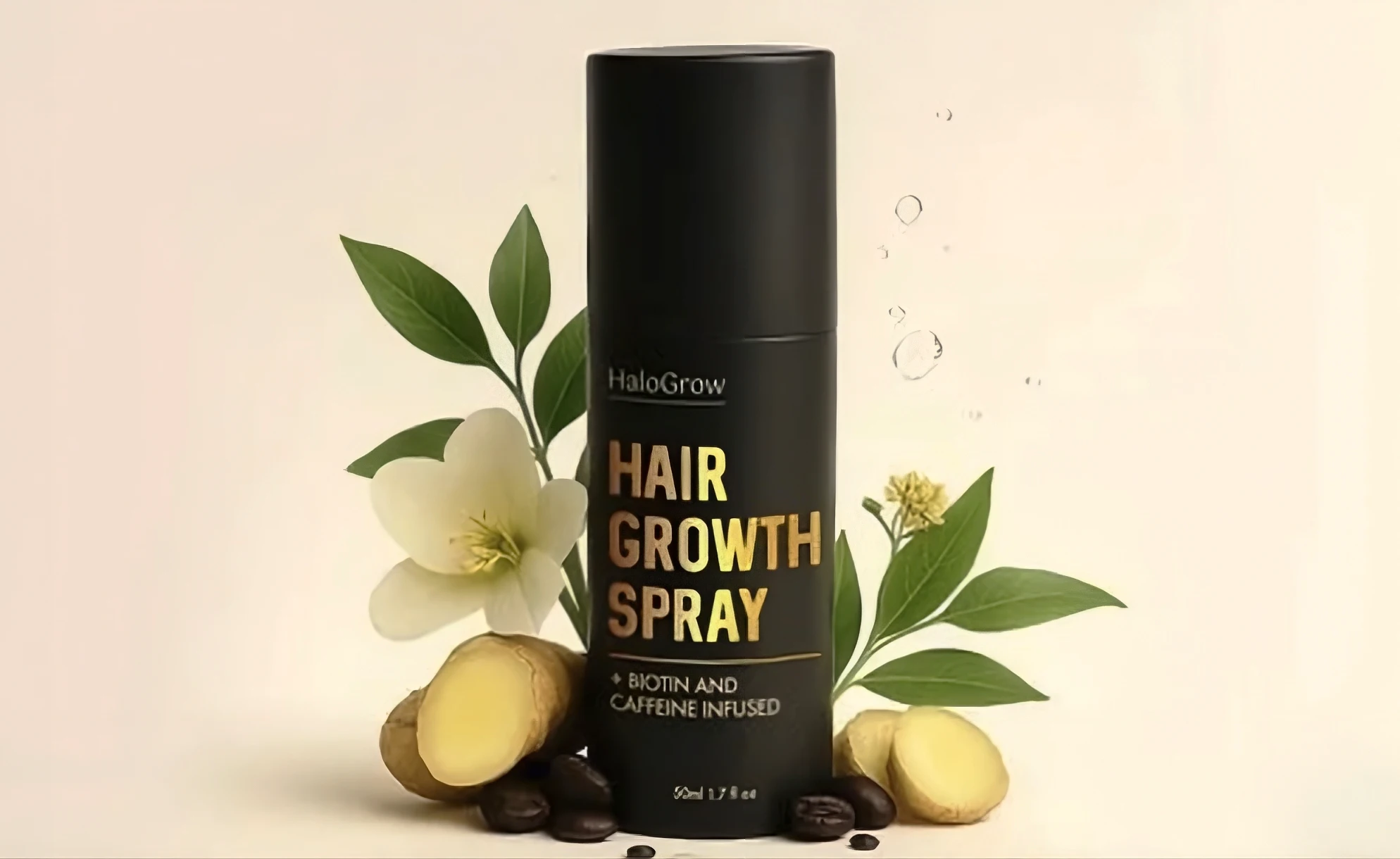
"Does this have chemicals that can harm you?" is one of the most common questions people type before ordering HaloGrow. It's a fair question: you spray it onto your scalp every day for months. Here's what's actually in the bottle, what each ingredient can and can't do, and who should check with a doctor first.
The 5 HaloGrow ingredients and their side effects
According to the manufacturer, HaloGrow is paraben-free and built on five main ingredients. Because the spray is applied directly to the scalp, they act locally and do not pass through the digestive system the way capsules do.
| Ingredient | What it does (claimed) | Possible side effects on the scalp |
|---|---|---|
| Caffeine | Supports the hair's growth phase; often used against DHT-related thinning | Very rare; mild irritation on very sensitive skin |
| Biotin (vitamin B7) | Building block for keratin, the hair's structural protein | Practically none when applied to skin |
| Aminexil | Helps keep the tissue around the hair root supple | Rare itching or redness |
| Castor oil | Moisturises the scalp | Rare contact allergy; can feel greasy if over-applied |
| He Shou Wu (Fo-Ti) | Traditional plant said to support scalp circulation | No known issues on the skin; see note below on oral use |
Source: Lei et al., systematic review of liver damage associated with Polygonum multiflorum (oral preparations), 2015.
One important point: HaloGrow does not contain minoxidil or finasteride, the two licensed hair-loss medicines. That means it also doesn't carry their typical side effects, such as initial shedding or hormonal effects.
Who should be careful with HaloGrow?
✅ Suitable for most adults
Thinning hair linked to hormones, genetics, stress, menopause or the months after pregnancy – the groups the manufacturer names.
〰️ Check with a pharmacist or GP first
Pregnancy and breastfeeding, known allergies to plant extracts or castor oil, liver conditions, or a diagnosed thyroid or hormone problem that is still untreated.
❌ Don't use without medical advice
Broken, sunburnt or inflamed skin, active psoriasis or eczema on the scalp, and patchy or sudden hair loss (alopecia areata). These need a diagnosis first.
How to do a patch test in 2 minutes
- Spray a little on the inside of your forearm or behind the ear.
- Leave it for 24 to 48 hours without washing it off.
- Check the spot: no redness, itching or swelling means you can start on the scalp.
- If it reacts: rinse with water and don't use the product.
Coloured hair, pregnancy and other common questions
Coloured or bleached hair: HaloGrow goes on the scalp, not the lengths, so it won't strip colour. Wait about 48 hours after colouring before the first spray, because the scalp is more sensitive straight after.
Pregnancy and breastfeeding: there's no specific warning from the manufacturer, but as with any active hair product, ask your midwife or GP first. Hair loss after birth (postpartum shedding) often settles on its own within months.
Thyroid problems: if your hair loss is caused by an under- or overactive thyroid, treating the thyroid comes first. A spray can support the scalp, but it won't fix the cause.
Do you need to use HaloGrow forever?
Honest answer: hair-growth products work while you use them. The manufacturer talks about visible results within roughly 8 to 16 weeks of daily use. If the cause of your thinning continues, the effect can fade gradually after you stop. That's true for minoxidil too.
Many people use it daily until they're happy, then reduce how often they apply it. Stopping isn't harmful: there's no rebound effect described for its ingredients.
Source: NHS, Hair loss (nhs.uk).
FAQ: HaloGrow side effects
Verdict: a low-risk option for most adults
HaloGrow is a scalp spray without minoxidil or finasteride, so the risks are small and local. Do a patch test, wait 48 hours after colouring, and ask your GP first if you're pregnant, have a liver condition or are losing hair suddenly. For gradual thinning, it's a sensible first step.
→ Visit the official HaloGrow website *