 Check
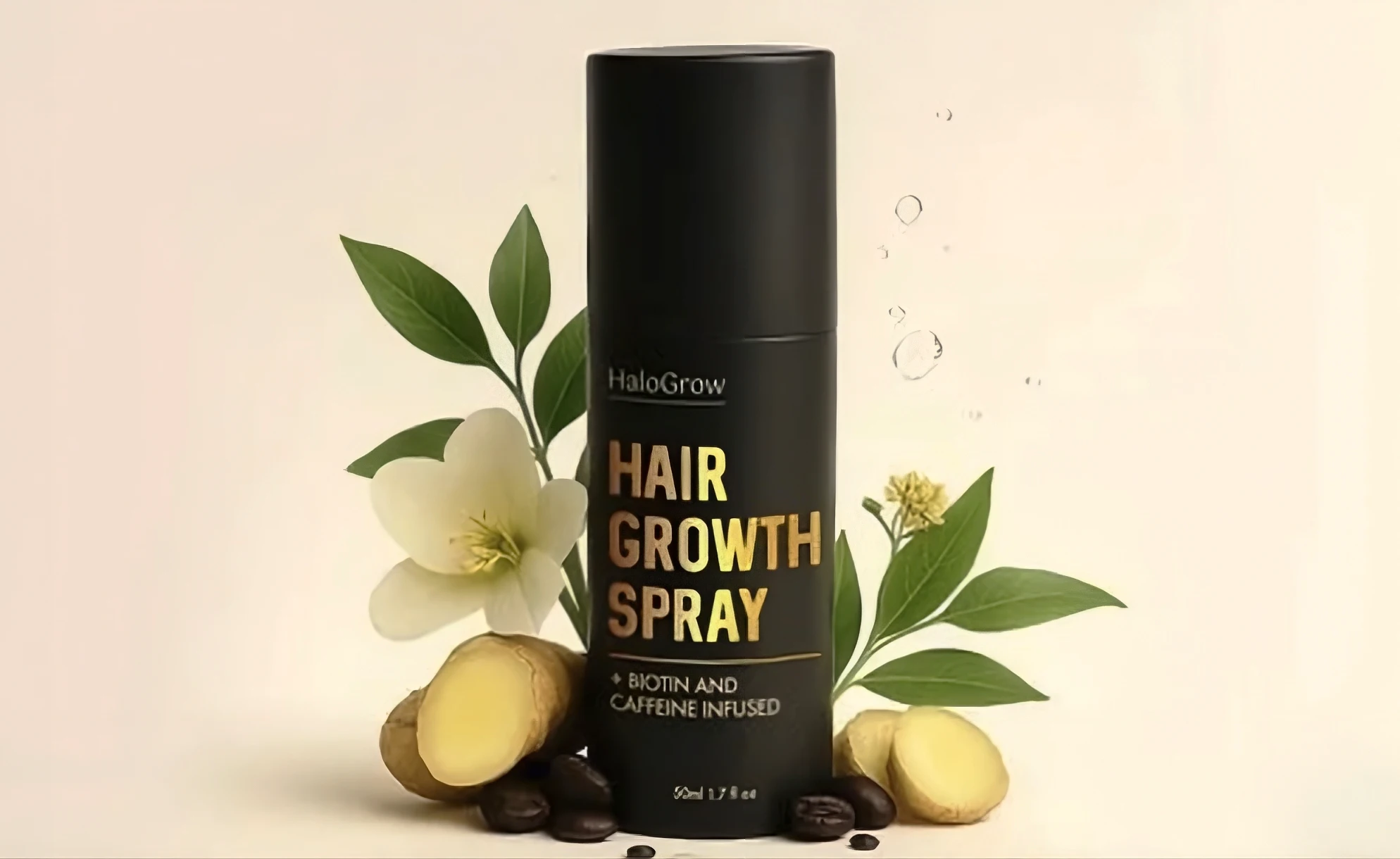
Search "hair growth spray reviews" and you'll find dozens of bottles promising thicker hair. Most of them fall into three groups: licensed medicines, cosmetic sprays with caffeine or vitamins, and plant-oil sprays. Knowing which group a product belongs to tells you more than any star rating.
The 3 types of hair growth spray
💊 1. Licensed medicine: minoxidil
Sold over the counter as Regaine and generic foams or solutions. The NHS names finasteride and minoxidil as the main treatments for male pattern baldness, and minoxidil can also be used for female pattern hair loss. It must be used continuously.
☕ 2. Cosmetic sprays with caffeine and actives
No medicine inside. They combine caffeine, biotin, peptides or aminexil to support the scalp and hair cycle. HaloGrow belongs here: according to the manufacturer it combines caffeine, biotin, aminexil, castor oil and He Shou Wu.
🌿 3. Plant-oil sprays (rosemary, peppermint)
Popular on social media. Some early research exists, but it is limited, and essential oils can irritate if not diluted.
Hair growth sprays compared
| Feature | HaloGrow (caffeine spray) | Minoxidil | Rosemary oil spray |
|---|---|---|---|
| Type | Cosmetic | Licensed medicine | Cosmetic / DIY |
| Contains a medicine | No | Yes | No |
| Strength of evidence | Moderate for caffeine | Strongest | Limited |
| Typical side effects | Rare local irritation | Irritation, initial shedding | Irritation if undiluted |
| Pregnancy | Ask your GP | Not recommended | Ask your GP |
| Where to buy | Official website | Pharmacies | Shops, online |
| Money-back guarantee | 30 days (manufacturer) | No | Varies |
What the evidence says
Minoxidil has decades of clinical use behind it. It doesn't work for everyone, and the NHS is clear that no hair-loss treatment is 100% effective.
Caffeine is the most studied cosmetic ingredient. Laboratory and small clinical studies suggest it can support the hair's growth phase and counter the effect of DHT at the follicle. Caffeine shampoos are widely sold in UK pharmacies for this reason.
Rosemary oil drew attention after a small 2015 trial found results comparable to 2% minoxidil over six months. One study is not enough to be sure.
Sources: NHS, Hair loss – treatment (nhs.uk); Panahi et al., rosemary oil vs minoxidil, Skinmed 2015.
Read the full HaloGrow Hair Spray ReviewIngredients, user feedback, results timeline and our verdict on HaloGrowWhich hair growth spray suits you?
- You want the most proven option and don't mind a medicine: minoxidil from a pharmacy.
- You want a gentle spray without medicines, or minoxidil irritated your scalp: a caffeine-based cosmetic spray like HaloGrow.
- Your hair is falling out suddenly or in patches: see a GP before buying anything.
- You're pregnant or breastfeeding: speak to your GP or midwife first.
How to use a hair growth spray properly
- Apply to a dry or towel-dried scalp, not to the hair lengths.
- Part your hair in thinning areas so the spray reaches the skin.
- Massage in gently for about a minute.
- Use it every day. Skipping days is the most common reason sprays "don't work".
- Take a photo every month in the same light. Change is slow and easy to miss in the mirror.
FAQ: hair growth sprays
Verdict: pick the spray by type, not by star rating
Minoxidil is the licensed option with the strongest evidence. If you'd rather avoid medicines, a caffeine-based cosmetic spray is the gentler route, and HaloGrow is a well-rated example with a 30-day money-back guarantee. Whatever you choose, give it three to four months of daily use.
→ Visit the official HaloGrow website *