 Check
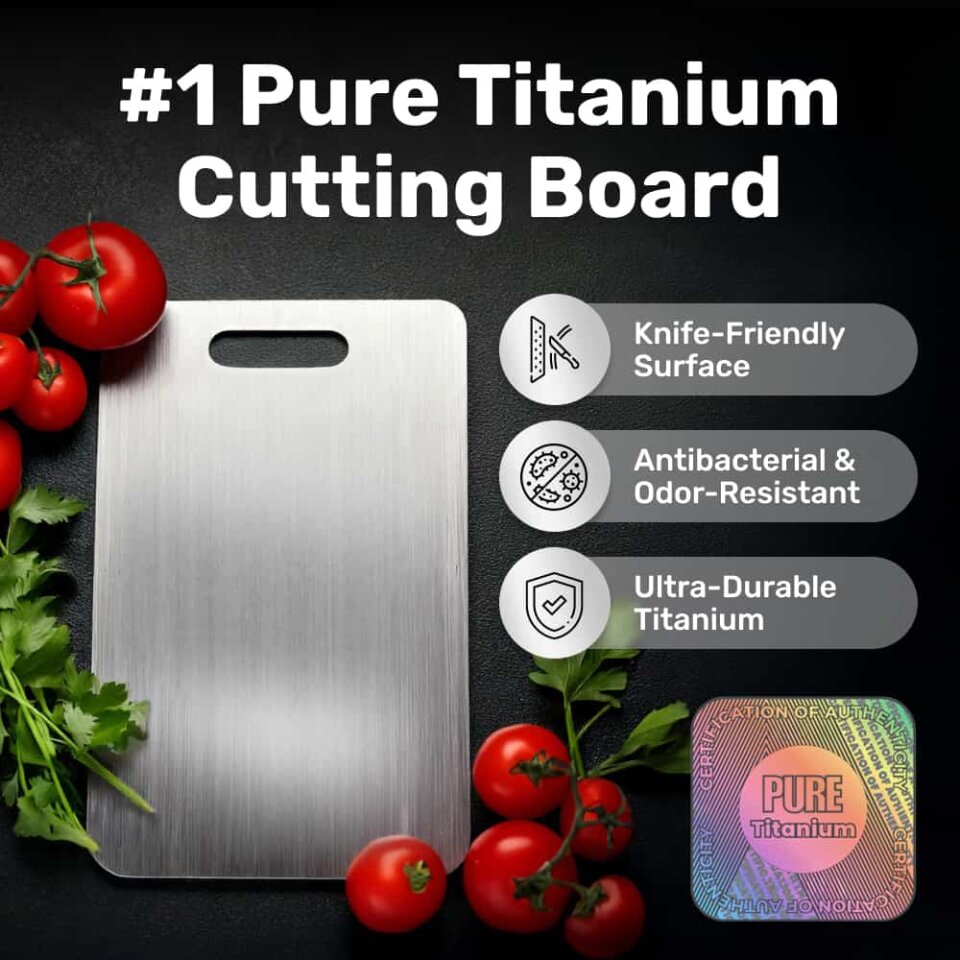
"Katori cutting board scam alert" and "titanium cutting board scam" are among the most searched phrases around these boards. The worry is justified: the category is full of cheap copies. But that doesn't mean every titanium board is fake. Here's how to tell the difference.
How the titanium cutting board scam works
Titanium is expensive to work with, stainless steel is cheap, and the two look almost identical. That makes it easy for dropshipping shops to sell a stainless steel board as "pure titanium". When America's Test Kitchen tested metal boards, it calculated each board's density from its weight and size and found that two of the three "titanium" boards were stainless steel.
Typical signs of the scam: a brand-new shop, social media ads with AI-generated presenters, a board stamped "SUS304" (a stainless steel grade) and customer service that only sends automatic replies.
Source: America's Test Kitchen, metal cutting boards review (americastestkitchen.com).
4 tests to spot fake titanium
- The weight test: titanium is about 40% lighter than stainless steel of the same size. A board that feels surprisingly heavy probably isn't titanium.
- The magnet test: titanium is non-magnetic. If a fridge magnet sticks firmly, it isn't titanium. (Some stainless steels are also non-magnetic, so this test only rules things out.)
- Look at the stamp: "SUS304", "18/8" or "18/10" means stainless steel.
- Check the seller: buy from the brand's own website with a clear guarantee, not from a shop that changes name every few months.
Do titanium boards blunt knives?
This is the honest part many adverts skip. Any metal board is harder on a knife edge than wood. In America's Test Kitchen's test, metal boards were tougher on knives than a wooden board. Titanium is softer than most stainless steel, so a genuine titanium board is gentler than steel or glass, but it is not a wooden board.
- Slice and push instead of chopping hard.
- Hone your knife every few uses.
- Keep a wooden board for heavy chopping or very delicate Japanese blades.
- Use the titanium side for raw meat and fish, where its non-porous surface is most useful.
Titanium vs stainless steel vs wood vs plastic
| Feature | Titanium | Stainless steel | Wood | Plastic |
|---|---|---|---|---|
| Non-porous | Yes | Yes | No | Until grooved |
| Absorbs odours / stains | No | No | Sometimes | Yes, over time |
| Gentle on knives | Moderate | Harder | Best | Good |
| Weight | Light | Heavy | Medium | Light |
| Dishwasher | Yes | Yes | No | Usually |
| Risk of fake listings | High | Low | Low | Low |
Where Katori fits
Katori is a double-sided board (about 29 x 20 cm) sold as 100% pure titanium through its official website, with a 30-day guarantee. Buyers mainly praise how easy it is to rinse clean and that it doesn't hold odours. It's compact, so it suits everyday prep rather than carving a joint.
If you buy one, run the weight and magnet tests when it arrives. If anything doesn't match the description, use the guarantee.
FAQ: titanium chopping board scam
Verdict: the scam is fake titanium – not titanium itself
Many "titanium" boards sold online are stainless steel. Real titanium is light, non-magnetic and non-porous – easy to clean and gentler on knives than steel, though not as gentle as wood. Buy from the brand, test it on arrival, and keep the guarantee in mind. Katori is sold that way.
→ Visit the official Katori website *